Beijing Hanyihuang Cloisonné Crafts Co., Ltd.
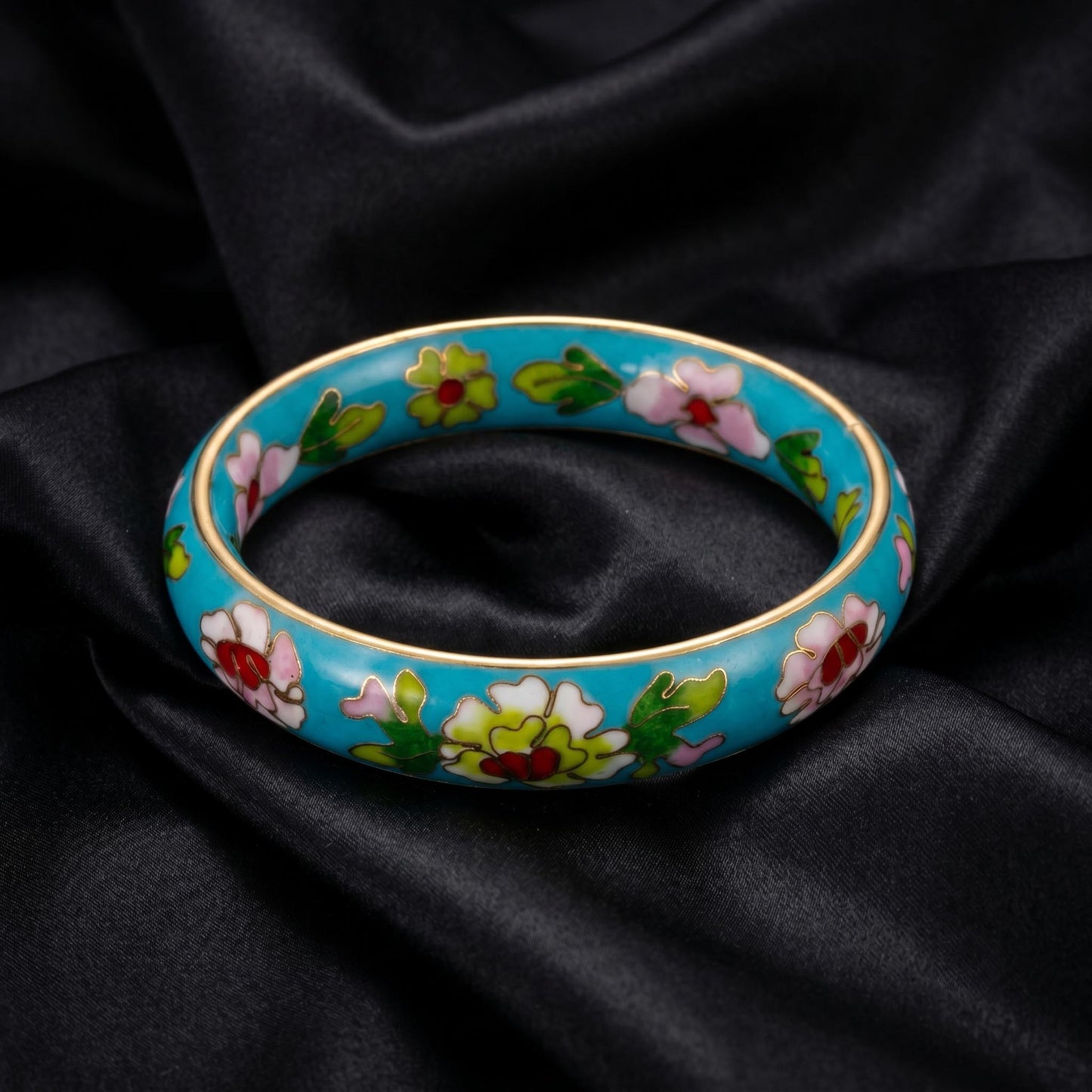
"Echoes of a Spring Stream" Sky-Blue Cloisonné Bangle | Handmade Beijing Cloisonne Art from China | Dubai GCC Luxury Collectible
"Echoes of a Spring Stream" Sky-Blue Cloisonné Bangle | Handmade Beijing Cloisonne Art from China | Dubai GCC Luxury Collectible
Couldn't load pickup availability
Design Concept
"Transforming the fleeting spring into an eternal companion" imbues static jewelry with the dynamism of flowing water, symbolizing the revival and cycle of life, and bringing the audience a cool and refreshing visual and psychological experience.
Key Specifications
| Attribute | Details |
|---|---|
| Material | Copper & Cloisonne Enamel & Gold |
| Dimensions | H 1.2 x W 6.0 x D 6.0 cm |
| Weight | 0.15 kg |
| Origin | Beijing, China |
Manufacturing Process
-
Design patterns
The inspiration for the creations comes from a long-term and persistent study of China traditional culture, which has led to both divergent and convergent thinking. Creation is far more complex than simply imagining.

-
Handmade copper billet
Making the copper billet mold is the first step in cloisonné production; only after a certain model is formed can the next step be carried out. This step is extremely crucial, as the shape of the mold determines the overall design of the cloisonné and is directly related to the main theme being created.

-
Wire inlay
The copper is forged into flat wires, which are then hand-pinched into patterns such as flowers, clouds, geometric shapes, figures, or animals. A natural adhesive made from Chinese medicine is used to attach the pinned copper wires to the copper base according to the design drawings.

-
Applying Enamel
Before the applying enamel process, the copper wire frame needs to undergo firing, leveling, and wire straightening. Enameling uses glaze made from ground natural minerals. According to the colors indicated by the pattern, the glaze is repeatedly filled into the copper wire decorative frame using an enameling gun or test tube.

-
Calcination
After cooling, it becomes a beautiful glaze that is fixed on the body. At this time, the glaze is lower than the height of the copper wire, so the glaze needs to be filled again. After sintering, the entire body after being enamelted is placed in a high-temperature furnace of about 800 degrees Celsius and fired with some mineral stone powder as fuel. The glaze melts from a granular solid into a liquid. This process usually takes four or five times until the glaze is filled to the same level as the cloisonné pattern.

-
Polishing
The fired objects are placed in water and polished step by step with coarse sandstone, fine sandstone, yellow stone, and linden charcoal until the surface is smooth as a mirror. Finally, linden charcoal and a scraper are used to smooth and polish the copper lines, bottom lines, and rims that are not covered with blue glaze.

-
Gold plating
After the cloisonné piece has been polished and smoothed, it undergoes acid washing, cleaning, and sandblasting before being placed in a gold plating bath. An electric current is then applied, causing the gold to adhere firmly to the metal parts of the cloisonné. Following washing, rinsing, and drying, a dazzling cloisonné piece emerges.

FAQ
Q: What is the significance of the "Jingjing" brand?
A: "Jingjing" is the registered trademark of the Beijing Hanyihuang. It represents the pinnacle of Chinese cloisonné, used for state gifts and museum-grade collectibles.
Q: How do you ensure the authenticity of the master's work?
A: Each masterpiece is accompanied by a unique "Collection Certificate" personally signed by the National Master, verifying its origin from our company.
Q: Are these artworks durable in the Middle Eastern climate?
A: Yes. Our patented "Gilding-free Brass" technology and mineral enamels are highly resistant to heat and oxidation, making them ideal for high-end interiors in the GCC.